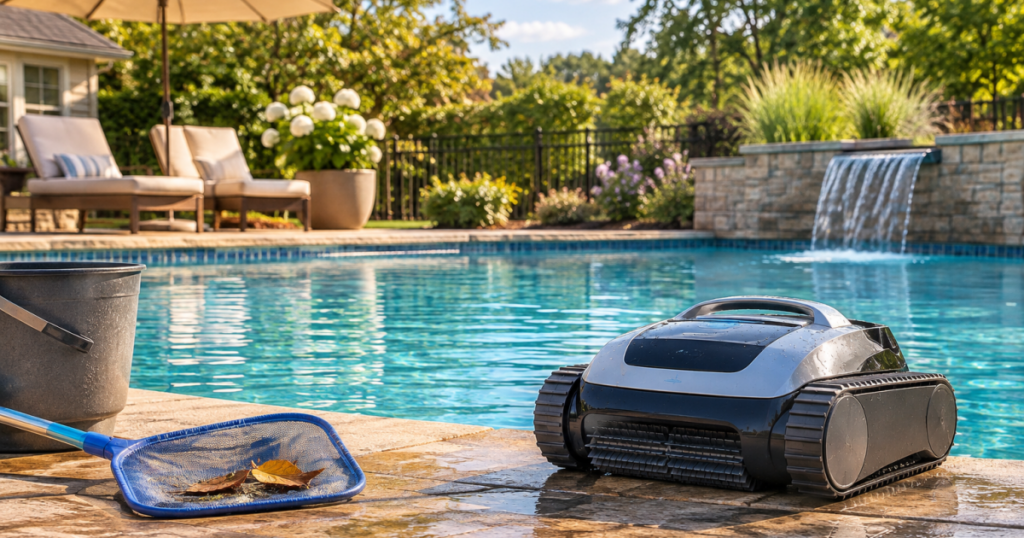
A robot can make the pool feel less like a Saturday chore and more like a background routine. The honest way to judge robotic pool cleaner workload is to separate debris pickup from total pool care: a good cleaner can remove a lot of physical mess, but it cannot run the whole backyard system for you.
That distinction matters because disappointed owners often expected one machine to replace brushing, skimming, chemistry checks, circulation, and storm cleanup. The better expectation is simpler: use the robot to handle the repeatable underwater debris job, then build the rest of the weekly routine around what it does not touch.
At a glance
- A robotic cleaner mainly reduces manual vacuuming, floor debris removal, and some brushing effort on surfaces it can reach.
- Wall and waterline cleaning depend on the model’s published coverage, pool shape, surface, and how well the robot maintains traction.
- Robots do not balance water chemistry, replace the pool pump and filter, skim every floating leaf, or fix circulation dead spots.
- Cordless models remove cable management from the routine, but add charging, retrieval, and battery-care habits.
- The best results usually come from pairing a robot with skimming, brushing problem areas, normal filtration, and regular water testing.
The chores a robot can realistically take over
Routine floor debris pickup
The biggest weekly win is the pool floor. Leaves, grit, pollen clumps, dirt, and the general “how did that get in there?” layer are exactly why most owners buy a robotic cleaner. Instead of manually vacuuming the floor or dragging hoses around, you drop in the robot, run the appropriate cycle, and empty the basket or filter afterward.
That does not mean every floor will look perfect after every run. Deep ends, bowl-shaped transitions, wrinkles in vinyl liners, raised drains, steps, and tight corners can change what the robot reaches. But compared with hand vacuuming the whole pool every week, floor cleaning is where the machine earns its spot.
Some wall and waterline scrubbing
Many modern robotic pool cleaners are sold with wall or waterline coverage, but the phrase is not a universal promise. Published coverage tells you what the model is designed to attempt; the actual result still depends on slope, surface texture, waterline residue, obstacles, and how loaded the filter is.
For owners with smooth, simple in-ground pools, wall cleaning can reduce how often you grab a brush. For pools with ledges, benches, sharp transitions, ladders, or textured surfaces, the robot may still leave zones that need quick manual attention. Treat wall cleaning as workload reduction, not a guarantee that every vertical inch is handled.
Debris collection before it hits the main filter
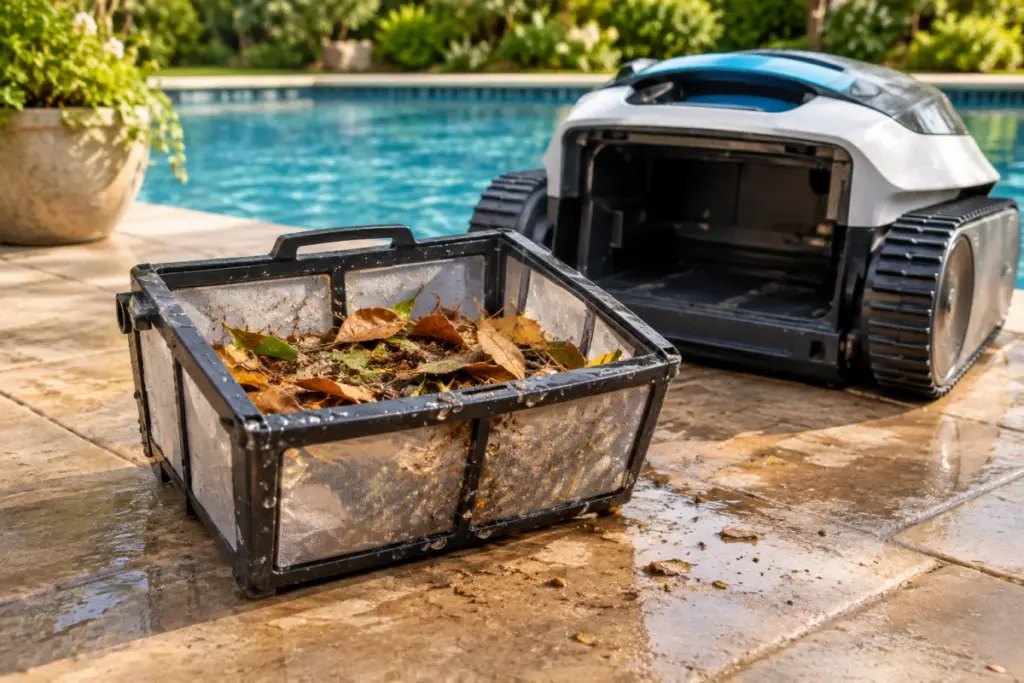
A robot can catch a lot of physical debris before it breaks down or gets pulled into the pool’s circulation system. That is useful after windy afternoons, pollen drops, mowing, or a busy swim day. The basket becomes the first stop for visible mess instead of asking the skimmer, pump basket, and filter to deal with everything.
Filter choice matters here. Coarser baskets are generally better suited to leaves and larger debris, while finer filter media is used for smaller particles such as sand, dust, or silt. The trade-off is maintenance: finer filtration can load up faster and may need more frequent rinsing.
The work a pool robot does not remove
Water chemistry still belongs to you
A robotic cleaner removes debris; it does not test, balance, sanitize, or stabilize the water. Chlorine, pH, alkalinity, calcium hardness, cyanuric acid, and other chemistry concerns remain part of normal pool ownership. A spotless floor can still sit under cloudy or unbalanced water.
This is the easiest expectation to get wrong because the pool may look cleaner after a cycle. Cleaner-looking water is not the same as properly managed water. Keep testing on your normal schedule and treat the robot as a debris tool, not a water-quality system.
Skimming the surface remains a separate job
Most floor and wall robots are not surface skimmers. They operate underwater, so floating leaves, seed pods, insects, sunscreen film, and pollen rafts may stay on top until the skimmer, net, or a dedicated surface skimmer handles them.
If your pool sits under trees, a robot may reduce the mess that sinks overnight, but it will not stop the first wave of leaves from drifting across the surface. In heavy debris periods, a quick net pass before running the robot can prevent the basket from filling too early.
Circulation and filtration still do the system work
Your pump and filter move and clean the water at a system level. A robot is mobile and targeted; it does not replace turnover, skimmer action, return-jet placement, or filter maintenance. If one end of the pool repeatedly collects debris, the robot can help clean it, but the pattern may also point to a circulation issue.
That is why two pools using the same cleaner can feel very different. One owner sees an easy weekly reset. Another keeps finding the same dirty corner because wind, returns, slope, and landscaping are funneling debris there every day.
Where cordless models change the weekly rhythm
Cordless robotic cleaners are popular because they remove the cable from the pool deck. That can make setup feel faster, especially around furniture, pets, kids, and irregular pool shapes. It also makes storage cleaner because there is no floating cord to coil after every run.
The trade-off is that cordless ownership has its own rhythm: charging, retrieval, battery storage, and choosing cycles with runtime in mind. A cordless robot may be the easier weekly habit for many owners, while a corded model may still appeal to someone who values continuous power and does not mind managing the cable.
If you are comparing current cordless options, the Cordless Pool Robot Model Tracker is the cleanest next step because it keeps model status and published comparison fields in one place.
A smarter weekly split of jobs
The most effective routine is not “robot versus everything else.” It is assigning each tool the job it handles best.
- Before the robot: skim heavy surface debris, remove toys, check for anything that could block movement, and brush stubborn algae-prone areas if needed.
- During the robot cycle: let the cleaner handle the underwater debris field without constantly interrupting it.
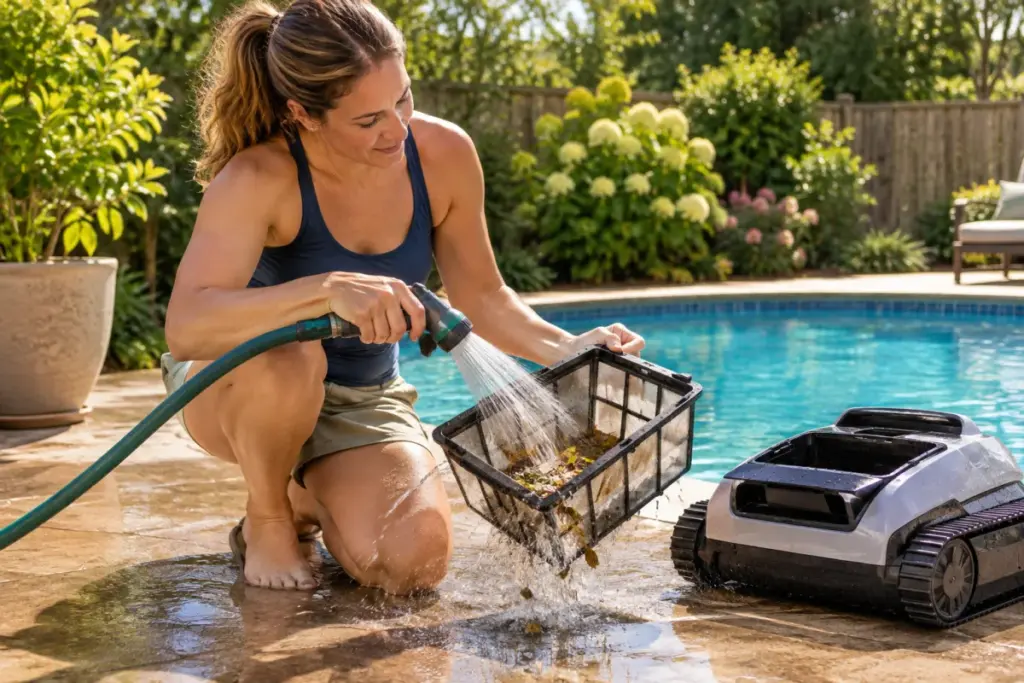
- After the cycle: retrieve the robot, empty and rinse the basket or filter, check brushes and tracks for trapped debris, and store or charge it as directed by the manufacturer.
- Separate from the robot: test and adjust water chemistry, maintain pump and filter equipment, and brush spots the robot consistently misses.
For a typical swim-ready week, the robot can become the dependable midweek or pre-weekend cleanup step. After a storm or heavy leaf drop, it may be the second step rather than the first: net the surface and large debris first, then let the robot do the floor cleanup.
Match expectations to the pool, not just the spec sheet
Pool shape changes the workload more than many spec sheets suggest. A simple rectangular pool gives a cleaner fewer navigation surprises. A pool with tanning ledges, beach entries, stairs, benches, ladders, sharp corners, or steep slopes asks more of the robot.
That does not mean complex pools should avoid robots. It means the owner should expect a mixed routine: let the cleaner reduce the bulk of the work, then use a brush or leaf tool for the awkward spots. If your pool has unusual geometry, read model pages with that in mind rather than treating max pool size as the whole story.
For example, a model such as the Aiper Scuba S1 is most useful to evaluate by its listed coverage, retrieval approach, and fit for your actual pool layout, not by brand recognition alone. The same logic applies to premium cordless models such as the Dolphin LIBERTY 600: look at what the model is designed to cover, then compare that with your pool’s trouble spots.
Common mistakes that make the robot look worse than it is
- Running it with a packed filter: suction and debris pickup can suffer when the basket or filter is already loaded.
- Expecting one cycle to recover a neglected pool: heavy cleanup may need skimming, brushing, filtration, and multiple passes.
- Ignoring recurring debris zones: if the same corner gets dirty every week, map the pattern and adjust timing, skimming, or circulation checks.
- Using the wrong filter for the debris: leaves and fine dust are different problems and may need different filter media.
- Skipping post-cycle care: rinsing filters, clearing tracks, and storing the robot properly help keep the weekly routine predictable.
Fast answers
Can a robotic cleaner replace manual vacuuming?
For many routine floor-cleaning weeks, yes, it can greatly reduce or nearly eliminate manual vacuuming. Manual tools still matter for neglected pools, tight steps, heavy storms, and spots the robot consistently misses.
Will it keep the pool ready for guests by itself?
Not by itself. A robot can make the floor and reachable surfaces look much better, but guest-ready water also depends on skimming, circulation, filter condition, and balanced chemistry.
Is cordless always less work than corded?
Cordless removes cable handling, which is a real convenience gain. It also adds charging and battery-management habits, so the easier choice depends on your pool size, cleaning frequency, storage setup, and tolerance for cord management.
What stands out
The real value of a pool robot is not magic; it is consistency. It turns the most repetitive underwater cleaning task into a scheduled cycle, then leaves you with the higher-judgment jobs: chemistry, surface debris, circulation clues, and awkward corners.
Seen that way, robotic pool cleaner workload is not about doing everything. It is about moving the dullest, dirtiest part of weekly care off your hands so the rest of pool ownership becomes easier to manage.