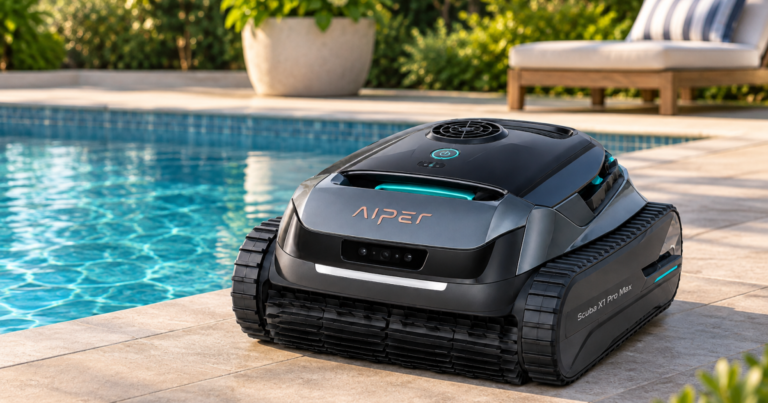
Latest review
Aiper Scuba X1 Pro Max Review: premium cordless coverage with a closeout twist
Big-pool cordless convenience is the hook, but the closeout status changes how urgently this model belongs on your…
Read review →
Pool Robot Report
Compare cordless and corded cleaners by coverage, runtime, debris pickup, and real ownership tradeoffs before you buy.
Compare ModelsStart exploring
Choosing a robotic pool cleaner is easier when the trade-offs are clear: corded versus cordless, floor-only versus wall-climbing, fine filtration versus big-leaf capacity, and…
Reviews →Robotic pool cleaning keeps changing fast, especially as cordless models, smarter navigation, and better filtration move into more backyards. Understand how these cleaners actually…
Robotic Pool Cleaning →The right robotic cleaner depends on pool size, surface, debris load, budget, and how hands-off you really want maintenance to be. Buying guidance here…
Buying Guides →A swim-ready pool is about timing as much as equipment: quick cleanups before guests arrive, weekly debris control, storm recovery, and opening-day routines all…
Swim-Ready Pool Routines →Robotic cleaners last longer when batteries, tracks, brushes, filters, seals, and storage habits are treated as part of ownership. Learn how to spot performance…
Care, Repair & Longevity →Cordless pool robots are improving quickly, but battery life, charging time, retrieval, navigation, and replacement costs still vary widely by model. Track the newest…
Cordless & Battery Watch →Freshly published
Big-pool cordless convenience is the hook, but the closeout status changes how urgently this model belongs on your…
Read review →Latest guides & advice
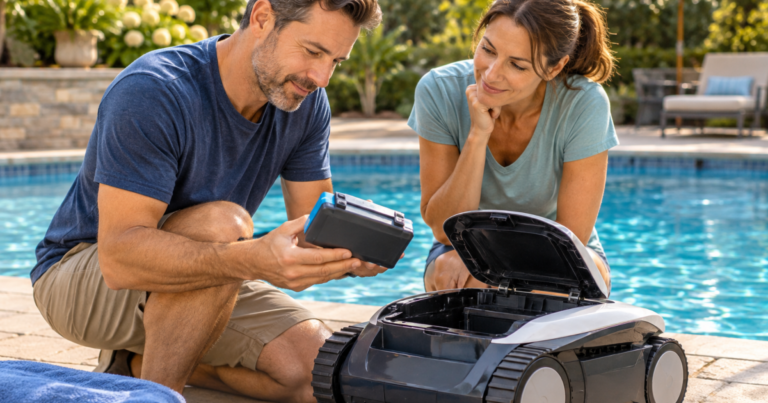
A weak battery does not always mean the robot is finished. The trick is knowing when repair still…
Read article →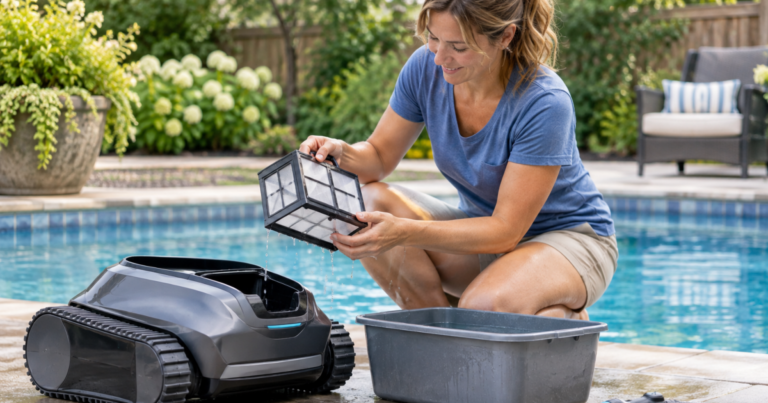
Treat the first runs as mapping sessions, and your robot becomes easier to schedule before guests, storms, and…
Read article →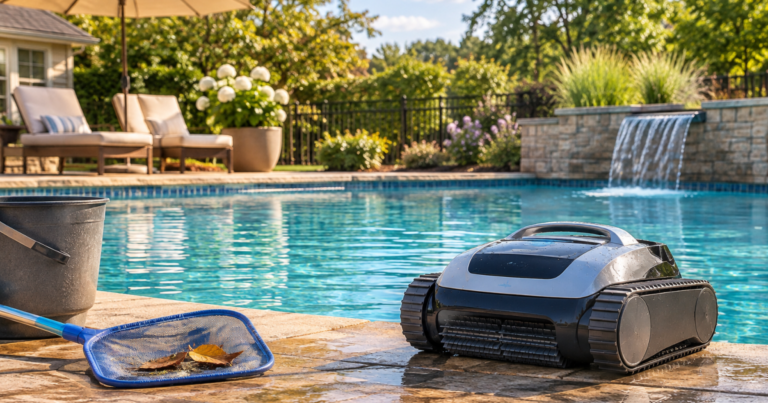
Pool robots can cut the dullest cleaning chores, but they do not replace brushing, skimming, chemistry, or smart…
Read article →Pool Robot Report is built for pool owners who want straight answers before spending real money on a robotic pool cleaner. The category is moving fast in 2026, especially with cordless models, smarter navigation, app controls, larger batteries, upgraded filter baskets, wall-climbing improvements, and new combinations of skimming, floor cleaning, and waterline scrubbing. That pace is exciting, but it also makes comparison harder. A cleaner that looks great in a product photo may be the wrong match for your pool shape, surface, debris load, slope, steps, shelf, or cleaning routine.
This site helps you sort through those details without turning pool care into a second job. The goal is simple: help you understand what matters, compare models with a practical eye, and choose equipment that makes your pool easier to enjoy. A good robot should give you more swim time, fewer manual vacuum sessions, and less frustration after windy days, heavy pollen, landscaping work, or a weekend of kids jumping in and out of the water.
Robotic pool cleaners are not one-size-fits-all machines. An above-ground pool with a flat vinyl floor has different needs than a deep in-ground gunite pool with benches, curves, drains, tile, and a messy tree line overhead. A pool that collects fine dust needs different filtration than one that mostly gets oak leaves, palm debris, pine needles, bugs, or grass clippings. Cordless convenience may matter most if your outlet is far from the pool, while a corded model may still make sense if you want longer runtimes and do not mind managing a cable.
Pool Robot Report is for homeowners comparing their first robot, pool owners replacing an older cleaner, and backyard tinkerers who want to know what the newest models actually bring to the table. It is also for anyone tired of vague claims like “smart cleaning” or “powerful suction” without a plain-English explanation of how those features affect everyday ownership. If you have ever wondered whether wall climbing is worth paying for, whether a cordless cleaner can handle your deep end, or whether an app-controlled robot is genuinely useful, you are exactly the kind of reader this site is made for.
The best pool robot for one owner can be a poor choice for another, even when both models are highly rated. That is why the smartest comparison starts with your pool, not the box. Pool size, depth changes, interior finish, debris type, ladder style, tanning ledges, steps, drains, waterline buildup, and how often you clean all affect what kind of cleaner will feel effortless versus annoying.
These are the ownership questions that matter after the return window closes. A cleaner can have impressive specs and still be irritating if it is heavy to lift, awkward to charge, slow to drain, prone to missing corners, or difficult to clean after every run. The right robot should fit the way you maintain your pool, not force you to change your whole routine around it.
Cordless robotic pool cleaners are one of the most interesting parts of the market in 2026. The appeal is obvious: no floating power cable, no cord tangles, no outlet planning, and a cleaner setup around the deck. Drop it in, let it work, pull it out, recharge, and get back to using the pool. For many owners, that simplicity is the feature that finally makes robotic cleaning feel easy enough to use several times a week.
But cordless is not automatically better for every pool. Battery size, motor efficiency, charging time, retrieval method, navigation pattern, cleaning coverage, and weight all matter. Some cordless models are excellent for routine floor cleaning but less convincing on vertical surfaces. Others are more capable all-around machines but cost more and require more thoughtful charging habits. A compact cordless cleaner can be perfect for a smaller pool, while a larger deep pool may need stronger coverage and a longer cycle. This is where side-by-side thinking pays off.
Pool Robot Report pays close attention to this fast-moving cordless segment because it is where marketing claims can get ahead of practical ownership. A strong recommendation should consider not only what the robot can do when new, but how it fits into a weekly pool routine: charging between cleanings, lifting it out when full of water, rinsing filters, storing it out of harsh sun, and deciding whether it is the only cleaner you need or part of a broader maintenance setup.
A robotic cleaner is one of the most satisfying pool upgrades because you can see the payoff. The floor looks cleaner. The water feels more inviting. The pool is ready sooner after storms, parties, mowing, or windy afternoons. But the robot is only part of the system. Filter choices, baskets, replacement parts, caddies, charging docks, skimmer behavior, chemical balance, and storage habits all influence how well the cleaner performs over time.
That is why this site also covers selective accessory and ownership topics where they genuinely affect day-to-day results. Fine filter panels can make a big difference in dusty areas. Larger debris baskets may matter if your pool sits under trees. A storage caddy can be worth it for heavier corded units. A retrieval hook or easier dock design can make cordless ownership smoother. Even simple maintenance habits, like rinsing filters after each run and letting components dry before storage, can extend the useful life of the machine and keep performance consistent.
The pleasure of a good robotic cleaner is not just that it removes debris. It changes the feel of owning a pool. Instead of staring at dirt on the floor and telling yourself you will vacuum later, you can start a cleaning cycle and move on with your day. That is a small backyard luxury, but it adds up all season long.
Pool cleaner shopping can get confusing because brands use similar language for very different capabilities. “Cleans walls” may mean dependable wall scrubbing, or it may mean occasional climbing under ideal conditions. “Smart navigation” may mean mapped, efficient coverage, or simply a more advanced movement pattern than random bouncing. “Up to” runtime can depend heavily on cleaning mode, battery age, water conditions, and pool shape. Reading between those lines is part of choosing well.
Pool Robot Report focuses on practical comparison: what the feature means, who it helps, when it is worth paying for, and when a simpler model may be the better buy. Sometimes the best choice is the most advanced robot available. Other times, it is a durable, easy-to-clean model that handles your debris type without expensive extras. The point is not to chase the flashiest machine; it is to match capability to your actual pool.
If you like backyard tech, robotic pool cleaners are a fun category to follow. The machines are getting smarter, more convenient, and more specialized. But if you just want a cleaner pool with less work, the same information still matters. The right guidance can save you from overbuying, underbuying, or choosing a model that solves the wrong problem.
A pool should feel like a reward, not a maintenance project that constantly steals time from the people who use it. The right robotic cleaner can help make that happen by handling the repetitive work that used to require a pole, hose, vacuum head, and patience. With a clearer understanding of model differences, cordless trade-offs, filtration needs, and real ownership routines, you can choose with confidence instead of guessing from product photos and broad claims.
Whether you are comparing your first robot, upgrading to a cordless model, replacing an aging cleaner, or fine-tuning your setup with better filters and accessories, this site is here to make the decision easier. Choose the cleaner that fits your pool, your debris, and your routine, and you will spend less time cleaning and more time enjoying the water.